Master the Odds: Top Casino Game Strategies to Win Big Right Now
Have you ever felt the thrill of a game where luck and skill meet in perfect balance? Casino games offer a straightforward way to test your fortune, from spinning reels on slots to challenging the dealer in blackjack. Each game works on simple rules, giving you control over bets and strategies while providing immediate, engaging feedback. The key benefit is the pure, accessible entertainment they deliver, turning a quiet evening into an exciting personal adventure.
Understanding the House Edge: How Operators Stack the Odds
The core mechanic of any casino game is the house edge, a built-in statistical advantage that ensures the operator profits over time. This edge is not random; it is mathematically stacked into the game’s rules. In roulette, the presence of the zero (and double zero) on the wheel creates a payout ratio that is less than the true odds, directly generating the house’s advantage. Blackjack’s edge fluctuates based on rule variations, like the dealer hitting on soft 17 or reduced blackjack payouts (6:5 vs. 3:2), which subtly shift the odds in the operator’s favor. Slot machines achieve this by programming paytables with a predetermined return-to-player (RTP) percentage, meaning the machine pays back less than it takes in over millions of spins. Understanding that the house edge is an unavoidable, mathematical tax on every wager, not a temporary streak of bad luck, is fundamental to Understanding the House Edge: How Operators Stack the Odds in all casino games.
Why the Probability Balance Favors the Establishment in Every Wager
Every wager is structured so the house edge ensures the establishment profits over time. In roulette, the green zero pocket tilts the probability balance; a bet on red wins 18 out of 37 outcomes, not 18 out of 36, giving the house a 2.7% mathematical advantage. On craps, the odds of rolling a specific seven are precisely calculated to favor the house on pass-line bets. Even blackjack’s seemingly fair odds are offset by the dealer acting last, turning player busts into immediate losses. Probability never fluctuates in your favor—it is a fixed, engineered disparity.
Key Mathematical Concepts: Expected Value and Return to Player Rates
In casino games, the Return to Player Rate (RTP) is the theoretical percentage of wagered money a game returns to players over countless cycles, directly derived from expected value calculations. Expected value (EV) represents the average outcome per bet, factoring all possible results weighted by their probabilities. For example, a slot with 96% RTP has a -4% expected value per spin, meaning the house edge is built into every wager. Understanding these metrics lets players realistically evaluate long-term losses, though short-term variance masks this underlying mathematical certainty.
Expected value and Return to Player rates quantify the mathematical house edge, giving players a predictable long-term loss percentage per wager.
Games Where Skill Can Slightly Tilt the Percentage
In games like blackjack online casinos or video poker, your decisions can slightly tilt the percentage in your favor, reducing the house edge to near zero. By applying basic strategy, you shift the odds from a guaranteed loss to a manageable disadvantage. The sequence for tilting the percentage involves:
- Learning the correct play for every hand or card combination.
- Managing bet sizes to capitalize on favorable streaks.
- Avoiding side bets, which carry a higher built-in edge.
This skill-based approach won’t guarantee wins, but it ensures the house earns less from your play over time.
Navigating the Classic Table Offerings: Strategy and Etiquette
Mastering classic table games requires both strategic discipline and social grace. On a blackjack table, always learn basic strategy charts before sitting down; signaling a hit with a hand tap and a stay with a flat palm avoids confusion. For roulette, accept that each spin is independent—avoid “due number” fallacies—but choose even-money bets (red/black, odd/even) for lower house edge. Never touch your chips once the dealer announces “No more bets.” A critical Q&A: Q: Should you correct a fellow player’s poor move at poker? A: No. Etiquette demands you stay silent; unsolicited advice disrupts the game’s flow and can be seen as collusion, potentially getting you removed from the pit. Maintaining composure and respecting the pace of the deal are non-negotiable.
Mastering the Green Felt: The Art of Spinning the Wheel
Mastering the Green Felt: The Art of Spinning the Wheel requires a disciplined approach to the roulette layout. Players must first grasp the distinction between inside and outside bets, as this directly affects risk and payout. Effective bankroll management is crucial, dictating how many spins you can endure. A common etiquette rule is to place chips only after the dealer has cleared the previous round’s payout, avoiding “late bets.” Observing the wheel’s tilt or rotor speed offers no statistical advantage, yet many players find comfort in the ritual. Q: What is the most strategic bet for a beginner mastering the green felt? A: The “even money” outside bets—like red/black or odd/even—offer the highest probability of a win, making them ideal for extending play while you learn the rhythm of the spin.
Card Counting in Blackjack: Myth Versus Practical Application
Many players overestimate card counting as a guaranteed winning system, a myth fueled by Hollywood. In practical application, it is a legitimate but challenging technique that tracks the ratio of high to low cards remaining in the shoe. The practical application of card counting requires immense concentration, flawless basic strategy, and bet variation, with only a slight statistical edge over the house. Casinos actively counter it with automatic shufflers and dealer cut-offs, making sustained success rare for amateurs.
Card counting offers a thin theoretical edge but is impractical for most due to casino countermeasures and the high skill level required.
Baccarat: A High-Stakes Game of Pure Chance
Baccarat strips casino gaming to its essence: pure chance with high stakes. You choose to bet on the Player, Banker, or Tie, then the cards decide everything. Unlike blackjack, no decisions influence the outcome, making it ideal for gamblers seeking simplicity. The key is understanding Banker bets offer the lowest house edge, typically around 1.06%. To play confidently, follow this sequence:
- Place your bet before cards are dealt.
- Watch two hands draw predetermined rules.
- Collect winnings or walk away after each round.
Avoid side bets, which drastically increase the house advantage.
Poker Variations: Where Player Psychology Beats the House
Unlike games of pure chance, poker variations such as Texas Hold’em or Omaha transform the table into a psychological arena. The house only collects a rake; your primary opponent is other players. Success hinges on reading behavioral tells and betting patterns to deduce hand strength. You exploit tight players by stealing blinds and pressure cautious opponents with large bets. Bluffing becomes a calculated narrative, not a gamble. The logical skill of pot odds and position merges with human psychology to create an edge over the house’s static advantage.
- Analyze opponents’ betting rhythms to distinguish confidence from fear.
- Adjust your raise sizes based on a player’s tolerance for risk.
- Use table position to control the flow of psychological pressure.

Digital Evolution: The Shift to Online Platforms
The shift to online platforms has fundamentally altered how you engage with casino games, moving from physical hardware to instant, cloud-based access. This digital evolution means your entire gaming session lives within a browser or app, eliminating downloads for most modern platforms. You now benefit from real-time digital adaptation, where game mechanics, such as volatility or payout algorithms, can be updated server-side without requiring you to reinstall software. Crucially, this transition has enabled on-demand game streaming, allowing you to test complex slot features or live dealer interactions directly from a mobile device. For practical play, this shift demands you verify your connection stability, as poor latency directly impacts live game performance, a key difference from offline casino terminals.
Live Dealer Experiences: Blending Virtual Convenience with Real-World Charm
Live dealer experiences bridge the gap between digital efficiency and authentic casino atmosphere by streaming real tables directly to your device. You choose your seat, place chips via an intuitive interface, and watch a human dealer shuffle cards or spin a roulette wheel in real time. This setup eliminates travel while preserving the social cues—dealer banter, card flicks, and chip sounds—that define land-based play. The key advantage is interactive realism without physical presence, as chat features let you converse with dealers and observe their movements without delay. Q: Do live dealer games feel slower than automated versions? A: Yes, because physical handling of cards or chips takes a few seconds per round, though this pace actually mirrors real-world table charm rather than machine-gun RNG speed.

RNG Technology: Ensuring Fairness in Virtual Reels and Cards
At the core of every virtual reel spin and digital card shuffle lies the Random Number Generator (RNG), a cryptographic algorithm that produces unpredictable outcomes independent of previous results. In online slots, the RNG constantly generates thousands of number sequences per second; the millisecond you press “spin” freezes a specific number, which maps directly to a symbol combination. For blackjack or poker, the RNG determines card order from a virtual deck, ensuring each hand is statistically random and cannot be predicted. Independent testing agencies audit these RNGs to verify their entropy meets strict standards, guaranteeing that no pattern or exploit exists to influence results.
Mobile Optimization: Playing on the Go Without Losing Quality
Modern mobile optimization ensures that casino games retain crisp graphics and smooth animations on smaller screens, regardless of network fluctuations. Touchscreen interfaces are redesigned for precise tap controls, allowing seamless spins and card selections without accidental inputs. Game loads are compressed to under two seconds on 4G while preserving high-definition visuals, a feat achieved through adaptive streaming. Native mobile frameworks synchronize account data instantly, so switching between Wi-Fi and cellular networks doesn’t interrupt play sessions or reset ongoing rounds. Battery consumption is managed via hardware-accelerated rendering, enabling extended gameplay without overheating.
Mobile optimization in casino games delivers uncompromised visual fidelity and responsive control during on-the-go play.
Slot Machines: From Mechanical Reels to Video Megaways
The clatter of a lever gave way to the silent cascade of digital frames. Sitting at a retro triple-reel machine, you feel the mechanical weight of each symbol landing—a tactile rhythm from the past. Now, the same coin activates a Megaways engine, where six reels shift their rows on every spin, offering up to 117,649 ways to win. The difference is night and day: you traded fixed paylines for a constantly morphing grid. **Q: Why does Megaways feel like a new game each spin? A: Because the reel height changes randomly per spin, so symbol patterns rarely repeat.** That slot conversion from mechanical to video transformed bonus rounds from simple multipliers into cascading reels, expanding wilds, and infinite ways to trigger free spins—all without leaving your seat.
Progressive Jackpots: How Prize Pools Skyrocket Across Networks
In networked slot machines, progressive jackpots create prize pools that skyrocket by linking a small percentage of every wager across hundreds or thousands of machines. This pooled contribution allows the top payout to swell into life-changing sums, often reaching millions. Players compete indirectly, as each spin feeds the shared meter until a lucky hit resets it. Network-linked progressive jackpots offer the highest potential returns, but only if you bet the maximum required to qualify for the grand prize.
- Wager the maximum bet to be eligible for the full progressive jackpot.
- Check if the jackpot is a standalone, local, or wide-area network for payout scale.
- Understand that the prize resets to a base amount after a win, then builds again.
Volatility Ratings: Choosing Between Frequent Small Wins and Rare Big Payouts
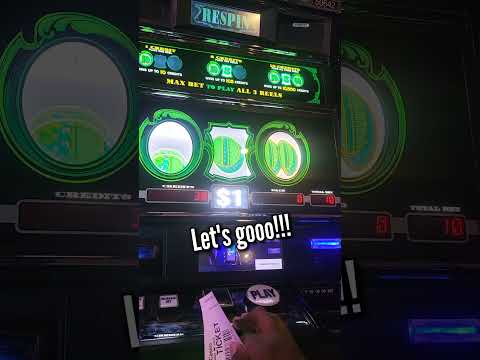
Volatility ratings classify slot machines by risk-reward structure, directly guiding your choice between frequent small wins and rare big payouts. Low volatility slots deliver consistent, modest returns, extending playtime and reducing bankroll swings. High volatility machines offer infrequent but substantial jackpots, suiting players who prioritize massive potential over session longevity. Medium volatility balances both, providing occasional medium-sized wins with some stability. Your bankroll size and patience threshold determine the optimal rating: choose low for steady engagement, high for high-risk lottery-like thrills. Understanding volatility rating selection prevents mismatched expectations and bankrupting dry spells.
Volatility ratings define the trade-off between win frequency and payout size; low volatility favors steady small wins, high volatility targets rare large payouts.
Thematic Immersion: Storylines and Graphics That Keep Players Engaged

Modern video slots achieve thematic immersion by weaving narrative arcs directly into gameplay, where each spin advances a storyline through visual cutscenes or evolving symbols. Graphics serve as the primary conduit for this engagement, using detailed character animations and shifting backgrounds that react to wins or bonus triggers. The pairing of a coherent plot with dynamic visuals creates a psychological anchor, making each session feel like a chapter rather than a series of isolated spins.This synergy between story and art transforms pure chance into a compelling journey, where players invest in seeing the narrative resolved.
- Progressive storylines unlock new graphical stages or characters as players achieve specific win thresholds.
- Cinematic-quality animations and themed soundtracks deepen emotional attachment to the slot’s world.
- Interactive bonus rounds are designed as story-driven mini-games, using graphics to reveal plot twists.
- Symbol designs evolve mid-game (e.g., a hero gaining armor) to visually reflect narrative progression.
Bankroll Management: Core Principles for Long-Term Play
For long-term casino play, bankroll management dictates you predetermine a loss limit and a win goal before any session. Never risk more than 1-2% of your total funds on a single bet, as this protects against variance. Your session bankroll must be separate from living expenses, treated as an entertainment cost. Divide your bankroll into smaller unit sizes based on your game’s house edge—lower volatility games allow for flatter betting. Stop immediately if you hit your loss cap; chasing recovery erodes capital. Similarly, walk away after reaching your win target to lock in profits, as prolonged play re-exposes you to the house edge. Consistent bankroll discipline is the only factor you control against an inherently negative expectation.
Setting Loss Limits and Win Goals Before You Start
Before you spin or bet, decide exactly how much you’re willing to lose and lock in a profit target. This pre-session bankroll plan keeps your play disciplined: once you hit your loss limit, walk away immediately—no chasing. Likewise, when you reach your win goal, cash out and celebrate. This prevents emotional swings from wrecking your bankroll. Q: What if I hit my win goal early in the session? A: Stick to your plan and stop playing. That win is secured, and pushing for more often reverses your luck.
Bet Sizing Strategies: Flat Betting Versus Progressive Systems
Flat betting involves wagering the same fixed amount on every round, which prioritizes longevity by mitigating variance and is the foundation of disciplined play. In contrast, progressive systems—such as the Martingale—require altering bet sizes after wins or losses, aiming to recover deficits rapidly but exposing the player to exponential risk during losing streaks. While flat betting preserves your bankroll against short-term swings, progressive systems can accelerate depletion if a table limit or extended losing sequence occurs. Choosing the right bet sizing strategy depends on your risk tolerance and whether you prioritize survival or chasing recovery.
Q: Which bet sizing strategy is safer for long-term play?
A: Flat betting is safer because it avoids the amplified losses inherent in progressive systems, ensuring your bankroll degrades linearly rather than catastrophically.
Avoiding the Gambler’s Fallacy: Understanding Independent Events
When managing your bankroll, remembering that each spin or hand is an independent event keeps your funds safe. The gambler’s fallacy tricks you into thinking a blackjack loss streak means a win is “due.” In reality, the deck has no memory. To stick to your plan, follow this process:
- Accept every outcome as random, regardless of past results.
- Refuse to increase bets after losses to chase a “correction.”
- Keep bet sizes consistent, based only on your bankroll percentage.
This mindset stops emotional bets and protects your long-term play.
Bonus Systems and Promotional Offers: What to Watch For
The welcome bonus looked enormous on the slot lobby, so I clicked “Claim.” After three hours of play, my balance sat frozen at zero. I had skipped the fine print: the wagering requirement was 45x, and my live blackjack bets only counted at 10% toward clearing it. That’s why you must always check contribution percentages. A classic trap is the “free spins” offer that caps your win at $50, no matter how many wilds land. Ask yourself: *Will this bonus actually let me withdraw what I win, or is the fine print designed to grind my playtime away?* Read the terms for max bet limits too—one slip over $5 can void both bonus and cash balance instantly.
Welcome Packages: Matching Deposits and Free Spins
Welcome packages typically combine a matching deposit bonus with a set of free spins, but the value depends entirely on the terms attached to each component. The match percentage (e.g., 100% up to $500) dictates how much extra bankroll you receive for your first deposit, while free spins are almost always tied to specific slot games. Wagering requirements often apply separately to the bonus cash and any winnings from free spins, so tracking each rollover condition is essential to avoid forfeiting real funds. Before committing, always verify the maximum bonus amount, the minimum deposit threshold, and any game restrictions on the spins.
- Match percentages and caps (e.g., 200% up to $1,000) directly affect your initial playing balance.
- Free spins are usually locked to one or two preselected slot titles, limiting your game choice.
- Time limits for using free spins and clearing the match bonus wagering can be as short as 7 days.
Wagering Requirements: The Fine Print That Limits Withdrawals
Wagering requirements are the hidden gatekeepers that transform a bonus from free cash into a contractual obligation. Before you see a single withdrawal, you must wager the bonus amount—often 30x to 50x—on slots or specific games, where only a fraction of your bet counts toward the playthrough. Slot contributions typically hit 100%, but table games might contribute as little as 10%, silently extending your grind. Always check the playthrough multiplier and eligible game list before claiming.
- Games like blackjack often contribute only 10–20% toward wagering, making them poor choices for clearing bonuses.
- Maximum bet limits (e.g., $10 per spin) while wagering prevent you from fast-tracking requirements.
- Time limits (e.g., 7–30 days) force you to complete wagering or lose the bonus and winnings entirely.
Loyalty Programs: Comp Points and Tiered Rewards
Loyalty programs reward your play through comp points and tiered rewards, but earning rates often favor high-volatility games. Track how many points you earn per wager, as slot machines typically accrue faster than table games. Tiered structures unlock perks like exclusive bonuses or faster withdrawals, though higher tiers may require substantial play to maintain. Always calculate if the point value is a genuine rebate or simply a trap to extend sessions. A comp point worth fractions of a penny is rarely a win.
Earn points carefully; tiered perks are only valuable if the upgrade cost doesn’t erode your bankroll faster than the rewards justify.
Responsible Participation: Recognizing Harmful Patterns
Responsible participation in casino games hinges on recognizing harmful patterns before they entrench. Setting firm time and money limits is the primary safeguard, but true vigilance requires tracking if you consistently exceed these boundaries. A key early warning sign is the “chase” – increasing bets after losses to recover funds, often leading to compounded debt. Another pattern is emotional cueing, where stress or boredom triggers an automatic urge to play.
If playing alone or hiding session length from others, the pattern has likely shifted from recreation to compulsion.
Consistently choosing casino games over essential commitments like bills or social plans signals that participation is no longer responsible. Self-reflection on these recurring behaviors, rather than isolated wins, is the core practice for sustaining control.
Signs of Problematic Behavior: Chasing Losses and Time Distortion
Chasing losses occurs when a player increases bets or continues playing specifically to recover money already lost, often leading to even greater losses. Time distortion involves losing track of how long you’ve been playing, as casino games’ fast pace and immersive design can warp your perception of minutes into hours. Together, these signs indicate a shift from recreational play to problematic behavior. If you notice yourself repeatedly trying to win back losses or realizing hours have passed without awareness, it signals a harmful pattern. Q: How can I tell if I’m chasing losses? A: If you feel compelled to keep playing solely to recoup money spent, and your decisions are driven by frustration rather than strategy, you are likely chasing losses.
Setting Time Alarms and Session Boundaries
Setting time alarms and session boundaries is a critical practice for detecting when casual play slides into compulsive behavior. Predefine a hard stop, such as a 30-minute alarm, before each session begins, and use a separate timer to enforce a mandatory 15-minute break after that limit. This creates a literal pause that interrupts the dopamine loop and allows you to assess your emotional state. Without these external cues, the brain’s reward system easily bypasses internal judgment, making scheduled session termination a non-negotiable tool for harm reduction. Boundary violations—ignoring two alarms in a row—signal a pattern requiring immediate day-long cessation.
Alarms and boundaries create an external brake against internal compulsion, forcing a check before escalation.
Resources for Support: Hotlines and Self-Exclusion Options
When recognizing harmful patterns in casino games, immediate self-exclusion and crisis hotline resources provide direct intervention. National helplines like the National Problem Gambling Helpline (1-800-522-4700) offer 24/7 confidential support and crisis counseling. Self-exclusion programs enable you to voluntarily ban yourself from specific casinos and online sites for set periods. The process typically involves:
- Identifying all applicable venues and online platforms you frequent.
- Submitting a formal request through the casino’s player services or state-run program.
- Setting a mandatory exclusion duration, often one year, five years, or permanently.
These tools sever immediate access and connect you to trained counselors who specialize in gambling harm.